Source three way motorized valve for HVAC, Water Treatment, and Industrial Systems
Find 30 listings for the three way motorized valve designed for HVAC, water treatment, and industrial applications. Buyers can compare specifications like voltage, pressure ratings, and connection types from verified suppliers in China.
Key considerations
Products List


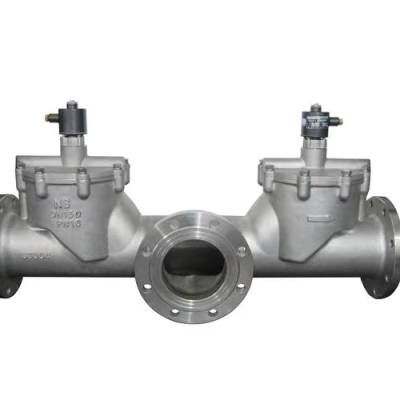


Comprehensive Sourcing Guide
Strategic Sourcing Guide for Three-Way Motorized Valves
The procurement of three-way motorized valves requires a disciplined approach that balances technical precision with supply chain reliability. These components are critical in fluid control systems where mixing, diverting, or switching between two flow paths is necessary. Buyers must navigate a complex landscape of specifications, certifications, and material standards to ensure the selected valve integrates seamlessly into their specific industrial or commercial infrastructure. This guide outlines the essential factors for sourcing these devices, drawing on observed market data and verified product attributes to inform decision-making.
Technical Specifications and Operational Parameters
When evaluating three-way motorized valves, the primary focus must be on the technical specifications that define performance and compatibility. The core functionality relies on the valve's ability to manage flow direction and pressure differentials under specific operating conditions. Observed market data indicates that models such as the DF-F and DSF-4U series are prominent in the category, often featuring specific port sizes and connection forms that dictate their application scope.
The port size is a critical dimension; for instance, a port size of 8mm is a documented specification for certain high-performance units. Buyers must verify that the connection form, whether threaded or flanged, aligns with their existing piping infrastructure. The connection dimensions, such as 8.1/9.6mm, must be matched precisely to ensure a leak-free seal. Furthermore, the maximum operation pressure differential is a vital safety parameter. Data suggests that certain models are rated for a maximum pressure differential of 2.5 bar when handling refrigerants like R22, R134A, or R407c. This rating is not universal across all three-way valves and must be confirmed against the specific fluid media and system pressure requirements.
The driving mode is another defining characteristic. While manual operation exists, the motorized variant typically utilizes electric actuation. Common voltage specifications include AC220V and DC24V, which must be compatible with the facility's power supply. The power consumption, often measured in horsepower (HP), ranges from 0.75 to 1.5 HP for larger industrial units. Additionally, the internal leakage rate is a key performance metric; a standard benchmark for high-quality units is an internal leakage of less than 1000 ml/min. Buyers should request test data to confirm that the specific model meets this threshold, as excessive leakage can compromise system efficiency and safety.
Compliance, Certification, and Standards Verification
In the global B2B market, compliance with international standards is non-negotiable for ensuring safety and interoperability. The supply chain for three-way motorized valves is characterized by a mix of certifications that validate the product's adherence to quality and environmental regulations. Verified product attributes indicate that many units carry CE certification, which is essential for market access in Europe and often serves as a baseline for quality assurance globally.
Beyond the CE mark, buyers should look for compliance with RoHS (Restriction of Hazardous Substances) and ISO standards. The presence of ISO certification suggests that the manufacturing process adheres to recognized quality management systems. However, it is crucial to distinguish between product-specific certifications and general industry standards. For example, while ISO5211 is a standard often associated with actuator mounting, it should not be assumed to apply to every listed product without explicit verification. Buyers must treat certification claims as observations that require validation against the specific batch or model number.
The material composition also plays a role in compliance. Stainless steel and brass are common materials observed in the market, each offering different benefits regarding corrosion resistance and durability. The choice of material often dictates the valve's suitability for specific media, such as water, gas, or oil. For applications involving aggressive fluids, stainless steel is generally preferred due to its superior resistance to chemical degradation. Buyers should verify that the material certification matches the intended application to prevent premature failure.
Cost Drivers and Pricing Structures
Understanding the cost drivers for three-way motorized valves is essential for budgeting and negotiation. The observed price range in the market spans from 1 to 3000 USD, reflecting the vast diversity in valve types, sizes, and capabilities. This wide range is influenced by several factors, including the complexity of the actuator, the material quality, and the level of customization required.
The Minimum Order Quantity (MOQ) is another significant cost factor. While some suppliers offer an MOQ as low as 1 unit, facilitating prototyping or small-scale projects, others may require a commitment of 100 to 500 units. The observed data indicates that an MOQ of 100 PCS is a common threshold for standard models. Buyers seeking to minimize inventory costs should prioritize suppliers with flexible MOQ policies, but they must balance this against the potential unit price increase associated with smaller orders.
Customization availability is a key variable in pricing. Products that offer customization options, such as specific voltage requirements, unique connection forms, or tailored actuator speeds, often command a premium. The standard export packing is typically included in the base price, but specialized packaging, such as wooden cases or palletized shipments for large orders, may incur additional charges. Buyers should request a detailed breakdown of costs to understand how material selection, certification, and packaging contribute to the final price.
Typical Applications and Industry Use Cases
Three-way motorized valves are versatile components used across a wide spectrum of industries. Their primary function is to control fluid flow in systems requiring mixing or diverting capabilities. In the HVAC sector, these valves are frequently employed to manage heating and cooling circuits, ensuring optimal temperature control in commercial buildings. The observed specifications, such as the ability to handle refrigerants like R22 and R407c, highlight their suitability for air conditioning and heat pump systems.
In industrial applications, the valves are used for process control in manufacturing facilities. The ability to handle media such as water, gas, and oil makes them ideal for chemical processing, water treatment, and oil refining. The nominal pressure rating, which can range from PN1.0 to 32.0 MPa, allows these valves to operate in high-pressure environments. The structure of the valve, whether fixed or flexible ball valve, determines its suitability for specific flow dynamics and pressure conditions.
Household usage is another application area, particularly for residential heating systems and water management. The compact design and electric driving mode make these valves suitable for integration into smart home systems. The warranty period, often cited as 12 months, provides a baseline for reliability expectations in both industrial and residential contexts. Buyers should match the valve's application rating, such as "Industrial Usage" or "Household Usage," to their specific project requirements to ensure long-term performance.
Supplier Evaluation and Quality Assurance
Selecting the right supplier is as critical as selecting the right product. The market is populated with manufacturers from various origins, with Ningbo, Zhejiang, China, being a prominent hub for valve production. Buyers should evaluate suppliers based on their production capacity, quality control processes, and adherence to stated standards. The presence of "Good" quality attributes in product listings is a positive indicator, but it should be supported by tangible evidence such as third-party test reports or audit certificates.
Quality control should be a continuous process throughout the procurement lifecycle. Buyers must verify that the supplier implements rigorous testing protocols for critical parameters like internal leakage, pressure differential, and voltage stability. The use of standard export packing is a baseline requirement, but for high-value or sensitive shipments, additional protective measures may be necessary. The warranty terms, typically 12 months, serve as a commitment from the supplier to stand behind their product. However, buyers should clarify the scope of the warranty, including coverage for defects, shipping damage, and installation errors.
Supplier evaluation should also consider the lead time and logistics capabilities. While specific lead times are not universally standardized, buyers should establish clear expectations regarding production and delivery schedules. The ability to meet the required MOQ without compromising quality is another key criterion. Suppliers that offer flexible ordering options while maintaining high standards are preferable for long-term partnerships.
Long-Term Procurement and Maintenance Considerations
Sourcing three-way motorized valves is not a one-time transaction but a long-term commitment that requires careful planning for maintenance and replacement. The durability of the valve depends on the quality of materials and the precision of manufacturing. Stainless steel and brass constructions offer different lifespans depending on the operating environment. Buyers should consider the total cost of ownership, including energy consumption, maintenance frequency, and replacement costs.
The cooling method, such as direct cooling, can impact the valve's longevity and efficiency. In applications where heat dissipation is critical, selecting a valve with an appropriate cooling mechanism is essential. The structure of the valve, whether it is a fixed or flexible ball valve, also influences maintenance requirements. Flexible ball valves may offer better sealing performance over time but might require more frequent inspection.
Buyers should establish a proactive maintenance schedule that includes regular checks for leakage, actuator performance, and electrical connections. The availability of spare parts and technical support from the supplier is crucial for minimizing downtime. A warranty of 12 months is a standard baseline, but extended warranty options or service contracts may be available for critical applications. By focusing on these long-term considerations, buyers can ensure the reliability and efficiency of their fluid control systems over the lifespan of the equipment.
Comparative Analysis of Key Valve Attributes
To facilitate informed decision-making, the following table summarizes key attributes observed in the market for three-way motorized valves. This comparison highlights the variability in specifications and helps buyers identify the features that align with their specific needs.
| Attribute | Typical Observation | Verification Requirement |
|---|---|---|
| Model Series | DF-F, DSF-4U, DQF-B | Confirm model number matches application |
| Port Size | 8mm | Verify against piping diameter |
| Connection | Threaded, Flanged | Check thread standard and flange rating |
| Max Pressure Diff | 2.5 bar (for specific refrigerants) | Validate against system pressure |
| Internal Leakage | <1000 ml/min | Request test report for specific batch |
| Voltage | AC220V, DC24V | Match with facility power supply |
| Material | Stainless Steel, Brass | Confirm compatibility with media |
| Certification | CE, RoHS, ISO | Verify current certificate validity |
| Warranty | 12 Months | Clarify terms and exclusions |
| Origin | Ningbo, Zhejiang, China | Confirm shipping and lead time |
This table serves as a reference point for buyers to cross-check product listings and ensure that all critical parameters are met. By systematically evaluating these attributes, procurement teams can mitigate risks and secure high-quality three-way motorized valves that meet their operational demands.
FAQs
What certifications do three way motorized valves typically have?
Many units carry CE certification, which is essential for market access in Europe and often serves as a baseline for quality assurance globally. Buyers should also look for compliance with RoHS and ISO standards to ensure safety and interoperability.
How is the minimum order quantity determined for these valves?
An MOQ of 100 PCS is a common threshold for standard models, though some suppliers offer an MOQ as low as 1 unit. Buyers seeking to minimize inventory costs should prioritize suppliers with flexible MOQ policies while balancing potential unit price increases.
Which materials are commonly used for the valve body construction?
Stainless steel and brass are common materials observed in the market, each offering different benefits regarding corrosion resistance and durability. The choice of material often dictates the valve's suitability for specific media like water, gas, or oil.
Can these valves operate with different voltage specifications?
Yes, common voltage specifications include AC220V and DC24V, which must be compatible with the facility's power supply. The driving mode typically utilizes electric actuation, and power consumption ranges from 0.75 to 1.5 HP for larger industrial units.
What is the maximum operation pressure differential for these valves?
Certain models are rated for a maximum pressure differential of 2.5 bar when handling refrigerants like R22, R134A, or R407c. This rating is not universal across all three-way valves and must be confirmed against the specific fluid media and system pressure requirements.
How is the internal leakage rate measured for quality assurance?
A standard benchmark for high-quality units is an internal leakage of less than 1000 ml/min. Buyers should request test data to confirm that the specific model meets this threshold, as excessive leakage can compromise system efficiency and safety.
What warranty period is typically offered for these products?
The warranty period is often cited as 12 months, providing a baseline for reliability expectations in both industrial and residential contexts. Buyers should clarify the scope of the warranty, including coverage for defects, shipping damage, and installation errors.